Contact Us
.svg)

5 Critical Mistakes to Avoid When Scaling Your Food Product: Insights for Emerging Brands
.svg)

5 Critical Mistakes to Avoid When Scaling Your Food Product: Insights for Emerging Brands80% of new food products are withdrawn within 12 months of launch. 85% of new CPG products fail within two years. These are not random outcomes. They are the predictable consequences of five mistakes that emerging brands make.
There is a statistic that everyone in food innovation knows and almost nobody says out loud at the beginning of a product development journey.
As per the Food Navigator report, 80% of new food products launched do not pass the 12-month mark. Grand Market Insights revealed that 85% of new CPG products fail within two years. And the sobering addendum: even the products IRI identifies as "pacesetters"—the ones that do well in their first year on shelf—are not safe. Of 258 pacesetters studied from 2002 to 2011, only 44% still existed in January 2013.
These numbers are not a referendum on the quality of ideas in the food industry. The ideas are often excellent. At the prototype stage, products often work exactly as intended.
What the numbers reflect is something more structural. A gap between what it takes to create a product and what it takes to commercialize one. A gap that most emerging brands discover only after they are already inside it.
The food industry doesn't talk about failure nearly enough. Below are the five specific mistakes that create them, and explaining what avoiding them actually requires.
Mistake One: Falling in Love with the Product Before Falling in Love with the Problem

The most dangerous place in food innovation is the development kitchen, when everything is working.
The aroma is right. The texture is right. The team is unanimous. And in that moment, a cognitive trap closes: the product becomes the goal rather than the means to one. The question shifts from "does this solve a real consumer problem better than anything currently available?" to "how do we get this to market as fast as possible?"
In many startup failures, the venture never found traction because there was no pronounced need for what it sold. The startup team fell in love with an idea, in part because it was fresh and intriguing, without realizing that admiration and demand aren't the same.
In food specifically, this plays out distinctively. A purchase becomes habitual, and the decision to buy becomes unconscious, once the consumer has bought the same product seven times. Getting to that seventh purchase requires not just a good product but one that fits into an existing behavior pattern, solves a recognizable problem, and delivers enough value to justify changing what the consumer already buys.
The brands that scale successfully are the ones that stress-test their concept against the consumer's actual life, not just the consumer's response in a controlled tasting environment, before committing to commercial production.
Mistake Two: Building a Cost Structure on Prototype Economics

There is a version of food startup mathematics that looks compelling on a spreadsheet and falls apart the moment it meets a real bill of materials at production volume.
Raw material price volatility can destroy your margin structure if not properly managed. Supply chain reliability becomes critical as you scale. A specialty ingredient supplier who was perfectly reliable for small orders might not be able to handle larger volumes or meet the quality consistency standards required for commercial production.
Beneath this lies a more fundamental structural reality that the food industry rarely discusses candidly. Packaged food businesses are difficult to scale because of low gross margins. After the cost of goods, cost of logistics, discounts, and retailer margins, the margin that remains — from which salaries must be paid, and marketing must be funded — is structurally thin in ways that most other consumer categories are not.
The implication for emerging brands is precise: the cost structure must be engineered from the beginning for the economics of commercial production, not validated at prototype scale and assumed to hold. Every specialty ingredient, every packaging format, every processing requirement needs to be modeled at production volume before the formula is locke because reformulating under margin pressure, after a manufacturing relationship has been established and a retail launch has been committed, is one of the most expensive problems in food.
At CJB & Associates, this is exactly what the Design to Consumer Value methodology is designed to prevent: identifying what the consumer will actually pay for, and optimizing the formula and package accordingly before cost structure becomes a constraint rather than a choice.
Mistake Three: Treating Co-Manufacturer Selection as a Logistics Decision
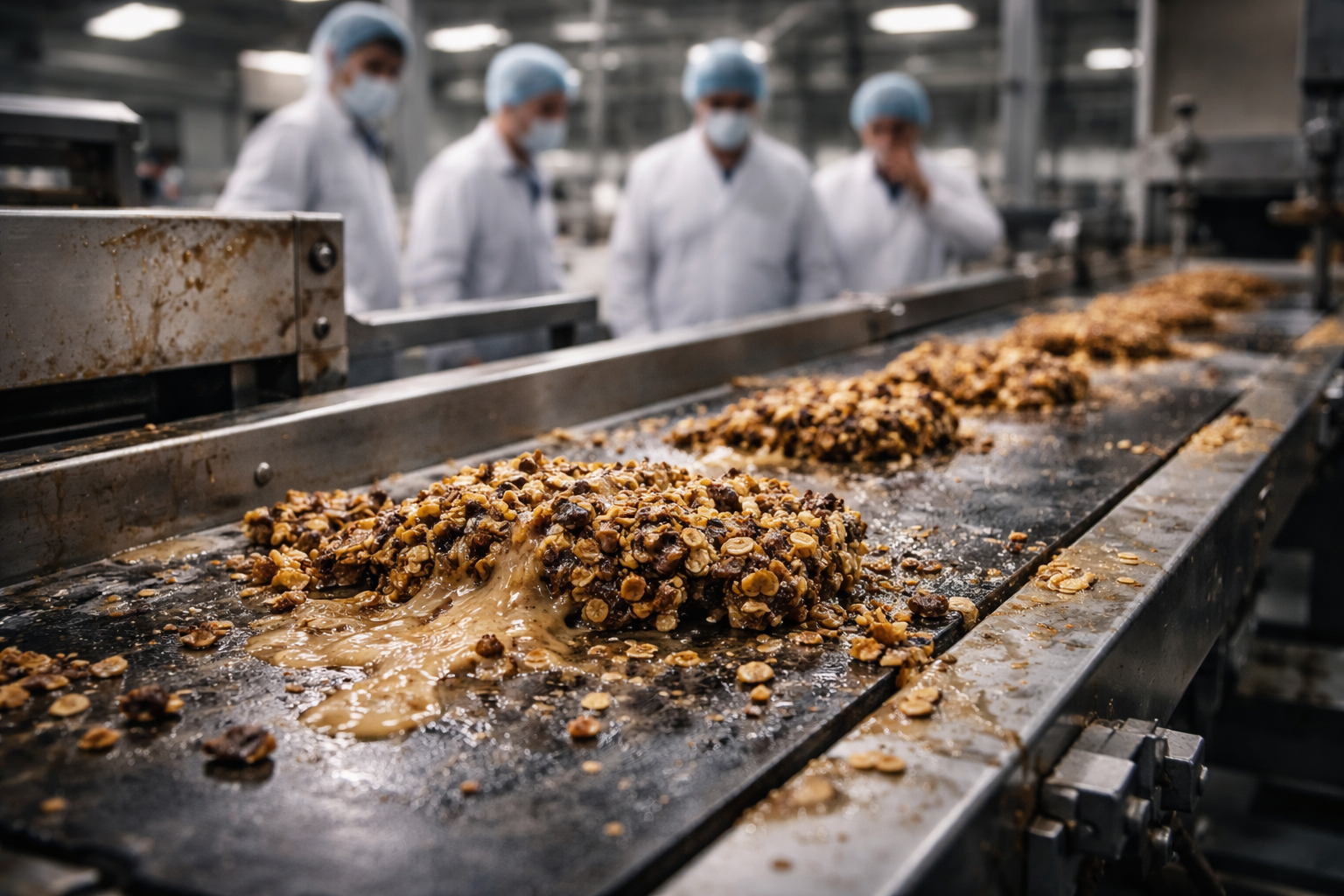
One of the most devastating surprises for food entrepreneurs is discovering that their chosen co-packer can't produce their carefully crafted clean-label formula. Their equipment requires different emulsifiers, their insurance demands certain preservatives, or their supply chain can't source specific organic ingredients at scale. Ingredient substitution can destroy brand identity.
Changing manufacturers multiple times is a costly, disruptive experience that early-stage brands are rarely capitalized to absorb well. Yet, it remains one of the most common experiences in the category, precisely because the initial selection was made on availability rather than compatibility.
The right co-manufacturer is not the one with capacity. It is the one whose processing capabilities are genuinely matched to what the product requires and whose quality systems, minimum order quantities, and operational culture are aligned with where the brand is now and where it intends to go. Making this match accurately requires knowing both sides of the equation: the product's technical requirements and the manufacturing landscape well enough to evaluate compatibility before the relationship is signed, not after the first failed run.
Mistake Four: Underestimating What Happens Between Batch and Line
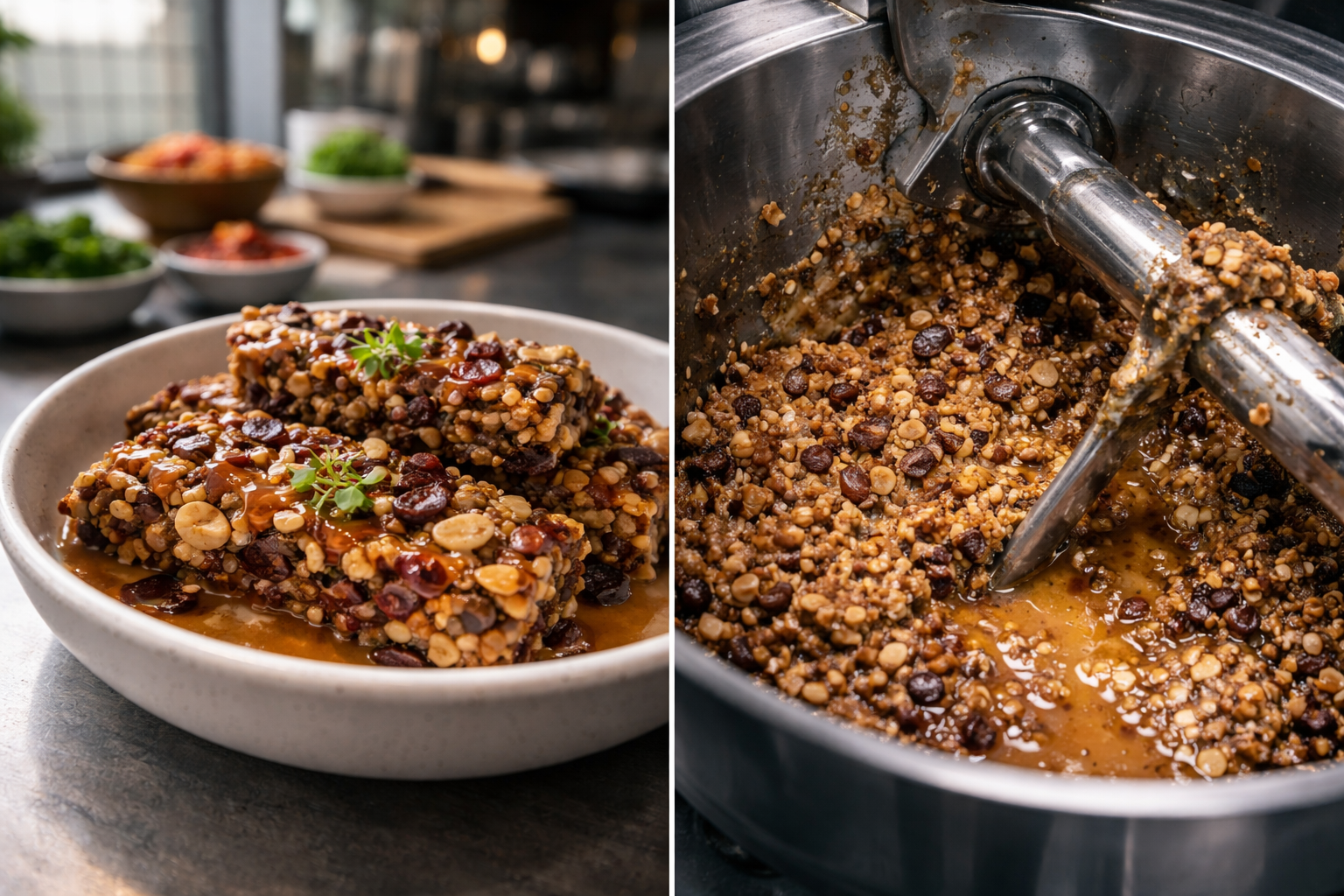
Recipe scaling isn't linear. Mixing times, cooking temperatures, and ingredient interactions change dramatically with volume increases. A sauce that tastes perfect in 5-gallon batches might separate or develop off-flavors in 500-gallon batches.
This is not a marginal risk or an edge case. It is the standard condition of food scale-up, and it is the point at which most of the technical failure modes that end food brands actually emerge. Not in the development kitchen, where conditions are controlled, and batches are small enough to manage manually. On the production line, where processing variables introduce a level of complexity that prototype testing cannot fully anticipate.
Quality control systems must evolve with scale. Hand-tasting every batch works when you are making 100 units. It doesn't work when you are making 10,000. Building systematic quality control processes requires investment in testing, documentation, and staff training that many startups underestimate.
The solution is not to avoid this complexity. It is to bring people into the process who have navigated it before, including food scientists and engineers who have taken products from bench to pilot to line across multiple categories and know where the failure points are likely to appear before the product ever reaches the factory floor.
CJB's team has done exactly this, across bars, cereals, snacks, frozen foods, beverages, sauces, and pet foods, working with clients from pre-revenue startups through to Fortune 100 companies, and in each case applying the same principle: the science that makes a product work in development must be stress-tested against the conditions of commercial production before the commitment to scale is made.
Mistake Five: Optimizing for Launch Instead of Velocity
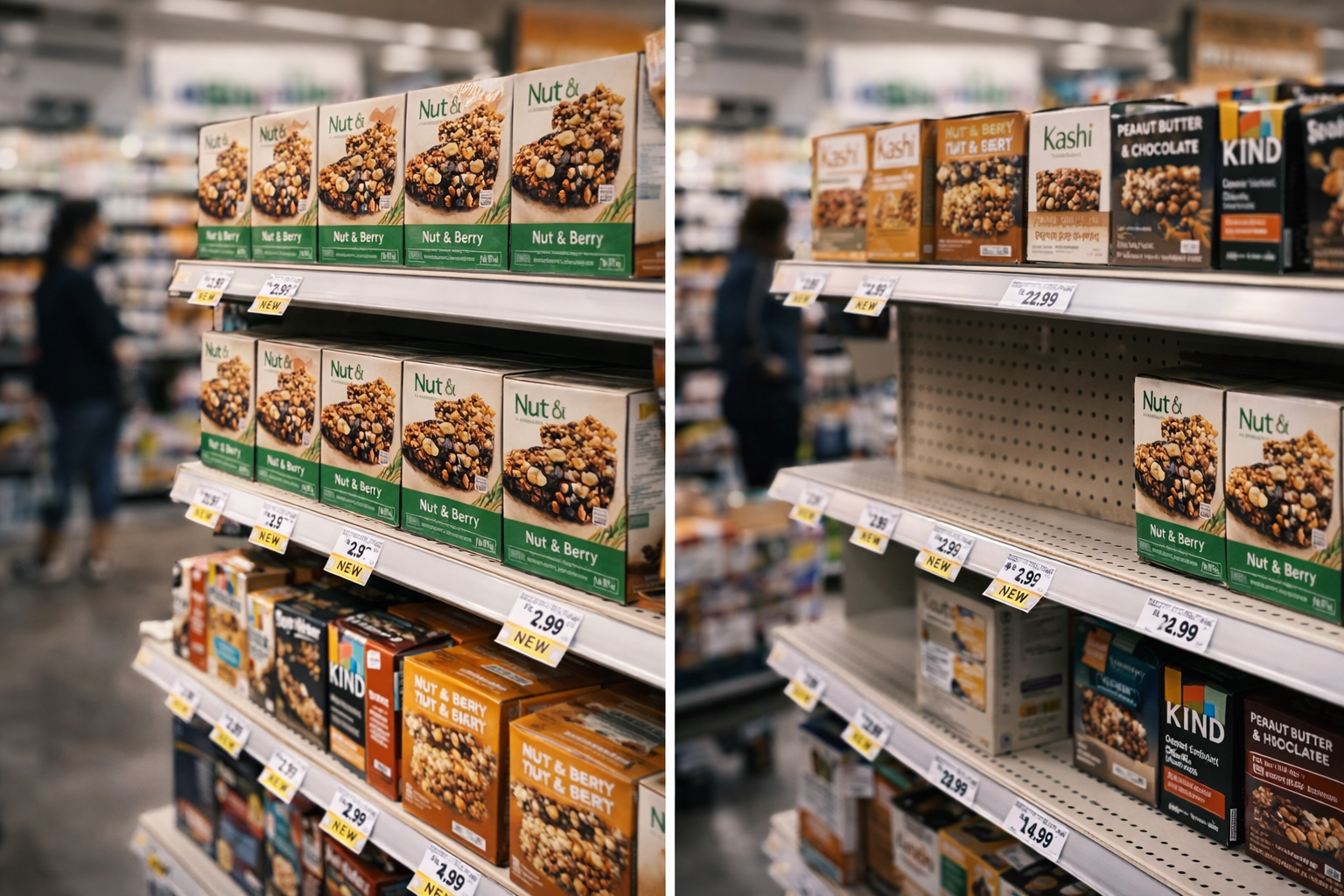
Launching big is not the definitive way to sustainable growth. This is a finding that took decades of CPG research to establish, and that emerging food brands continue to learn the hard way.
A product that lands on the shelf with strong distribution and early momentum can still fail if it does not generate the repeat purchase velocity that justifies the shelf space. Retailers do not hold SKUs out of loyalty. They hold them because the velocity data supports it. And velocity is determined not by the launch, but by what happens every time a consumer who bought the product once decides whether to buy it again.
Innovation is not just about a brand or a product, which can be imitated, but about a business model; how you manage your supply chain, things that can't be replicated so easily. The brands that sustain shelf presence are the ones that built operational consistency into the product from the beginning: the same taste, the same texture, the same quality, batch after batch, month after month, regardless of ingredient variability, seasonal supply shifts, or manufacturing changeovers.
Consistency at that level is not an accident. It is the output of rigorous formulation, validated manufacturing processes, robust quality systems, and supply chains designed for reliability rather than just initial cost. It is, in short, the output of treating commercialization as a technical discipline rather than a finishing step.
The five mistakes outlined here share a common root: they are all, in different ways, the consequence of treating food product development as only a creative process rather than a scientific and commercial one.
The creativity matters. Without it, there is no product worth scaling. But people who really understand that they are building a business, not just a brand, generally do better. And building a business in food means respecting every stage of the journey from concept to shelf with the scientific depth, the commercial experience, and the network of expertise that each stage actually demands.
That is the work CJB & Associates is built to do. From the first ideation session to the last quality check before launch.


.png)
.png)
.jpg)