Contact Us
.svg)

Navigating the Future of Natural Food Colors: Formulation Insights and Transitioning from Synthetics
.svg)

What food and beverage developers need to know before making the switch.

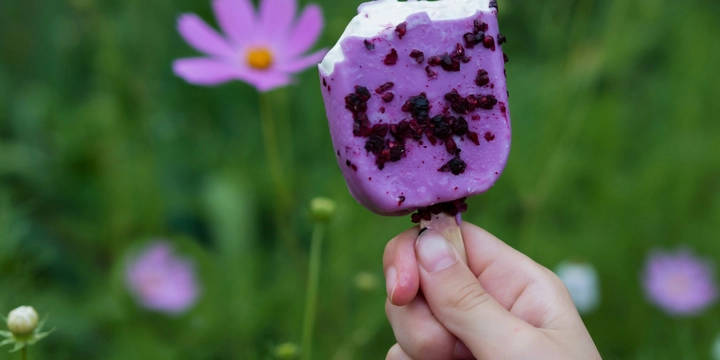
Natural colors have moved past trend status. Regulatory momentum in the United States and internationally, combined with retail shelf requirements from major grocery chains, has made the transition from synthetic to natural colorants a practical business decision for many brands, not just a positioning one.
The science behind that transition is more demanding than the marketing conversation suggests. Natural color sources behave differently than FD&C dyes. They require more formulation discipline, tighter process controls, and a realistic understanding of where they perform well and where they struggle. Getting that right from the start saves significant reformulation time and cost downstream.
Natural Color Sources: Functional Profiles and Honest Limitations
The natural color toolkit has expanded considerably over the past decade. Several sources now offer reliable performance across a range of applications, each with distinct functional profiles.
Beet concentrates deliver vivid reds and pinks and perform well in dairy applications, beverages, and confectionery at ambient temperatures. Their primary limitation is heat sensitivity. Above roughly 80°C, betacyanin pigments begin to degrade, which makes beet-derived colors a poor fit for retorted or baked applications without encapsulation or processing adjustments. They are also pH-sensitive, shifting toward blue-red tones in alkaline environments.
Turmeric provides yellow to orange hues driven by curcumin and is among the more heat-stable natural options available. It performs well in dry applications, savory products, and dairy. The formulation challenge is light sensitivity: curcumin degrades under UV exposure, which shortens effective shelf life in transparent packaging. Fat-soluble by nature, it also requires emulsification for aqueous systems.
Spirulina-derived phycocyanin is the natural category's primary source of blue, a color historically difficult to achieve without synthetic dyes. It delivers striking blue-green hues and is gaining adoption in beverages, confectionery, and frozen applications. It is also among the least stable natural options. Heat above 50°C, low pH, and light exposure all degrade the pigment rapidly. Cold-process, low-acid formulations are where spirulina performs most reliably.
Butterfly pea flower is generating significant interest for its pH-responsive color shift, moving from blue at neutral pH to purple and pink as acidity increases. That reactivity is a genuine formulation asset in applications designed around the effect, such as color-changing beverages, but it requires precise pH management in conventional products where consistency is the goal.
Paprika oleoresin provides orange to red tones and is one of the more stable natural colorants available. Carotenoid-based, fat-soluble, and relatively tolerant of heat and processing, it is well-suited to snacks, processed meats, soups, and sauces. Solubility in aqueous systems requires emulsification, and color intensity can vary by crop and extraction method.
Carrot concentrates offer yellow to orange hues from carotenoids and beta-carotene. They are heat-stable, widely accepted on ingredient labels, and perform across both water and oil-based systems when properly formulated. Light and oxygen exposure remain stability concerns, particularly for products in extended shelf-life formats.
Formulation Challenges That Derail Transitions
The most common mistake brands make when transitioning to natural colors is underestimating how much the formulation environment interacts with the pigment. Synthetic dyes are engineered for stability across demanding processing, pH, and shelf-life conditions. Natural pigments are not.
pH is the first variable to evaluate. Many natural colorants shift tonally as pH changes, which means a color that looks correct at development may look significantly different in the finished product depending on acidulant levels, buffering capacity, and ingredient interactions. Mapping pH across the formula before selecting a color system is a basic step that gets skipped more often than it should.
Heat processing is the second major variable. Pasteurization, retort, extrusion, and baking all impose different thermal demands, and pigment stability varies considerably across these conditions. Encapsulation technology has expanded the heat tolerance window for several pigments, including beet and spirulina derivatives, but adds cost and requires validation against specific process parameters.
Shelf life performance in the intended packaging and storage conditions should be validated early. Light transmission, headspace oxygen, water activity, and refrigeration requirements all interact with natural pigment stability in ways that compound over time. What holds at eight weeks may not hold at sixteen. Accelerated shelf life studies run against actual formulation and packaging conditions are not optional for brands serious about commercial viability.
Color consistency between production runs is a sourcing issue as much as a formulation one. Natural pigments vary by crop season, growing region, and extraction process. Establishing color specification ranges, requiring standardized pigment concentrations from suppliers, and building incoming quality control into procurement are necessary steps that synthetic color sourcing never demanded.
Guidance for Brands Making the Transition
Start with application-pigment fit before selecting a supplier. The color source has to be technically appropriate for your processing conditions, pH environment, and shelf life requirements. Choosing a color based on label appeal and engineering around its limitations afterward adds time and cost that a better upfront decision avoids.
Work with suppliers who provide full technical data. Stability data across pH, temperature, and light exposure, pigment concentration specifications, and lot-to-lot variability documentation are the baseline for a serious commercial evaluation.
Plan for higher use rates than the synthetic equivalent. Natural colorants typically require higher inclusion levels to achieve comparable visual intensity, which affects cost-in-use and can introduce flavor contributions from the pigment or its carrier.
At CJB and Associates, we have guided brands through natural color transitions across snacks, beverages, dairy, and foodservice. The formulation work is manageable when approached systematically. If your team is evaluating a transition or hitting stability challenges mid-project, reach out. We are ready to help you find the path forward.

.png)
.png)
.jpg)